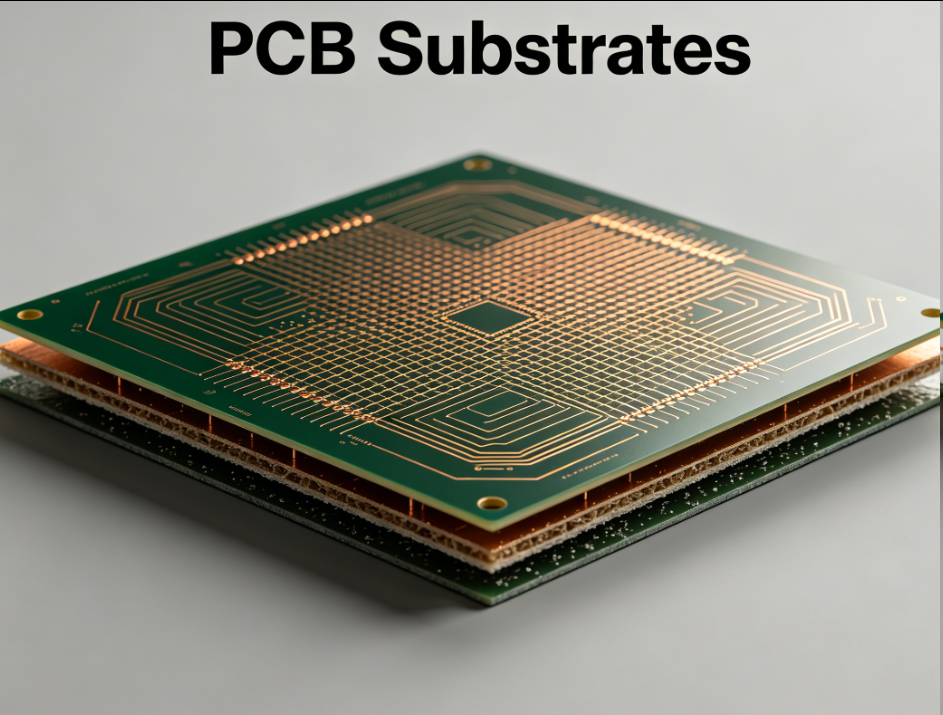
Factors Affecting the Glass Transition Temperature (Tg) of PCB Substrates
The Glass Transition Temperature (Tg) of Printed Circuit Board (PCB) substrates is a critical metric indicating the temperature at which the material transitions from a rigid glassy state to a rubbery, high-elastic state. The Tg value directly determines the dimensional stability, mechanical strength, electrical performance, and overall reliability of a PCB under high-temperature environments. In practical PCB design and manufacturing, the Tg value is not a fixed constant; it is influenced by a combination of various factors. A deep understanding of these influencing factors is essential for engineers to select appropriate base materials, optimize PCB designs, and ensure long-term product reliability across various working environments. The following analysis details these factors from multiple dimensions, including material formulation, resin systems, curing processes, moisture absorption, copper foil structure, lamination design, and testing methodologies.
I. Chemical Structure of the Resin System: The Fundamental Determinant of Tg
The core component of PCB substrates is the resin, and its chemical structure is the most fundamental factor determining the Tg value. Currently, the most common resin systems used in PCB substrates include Epoxy Resin, Polyimide (PI), BT Resin (Bismaleimide Triazine), Polytetrafluoroethylene (PTFE), and modified epoxy resins. Different resin systems exhibit vastly different Tg values due to variations in their molecular chain structures, cross-linking density, and content of rigid groups.
Epoxy resin is the most traditional and widely used substrate material. Conventional Bisphenol-A epoxy resins typically have a Tg of around 130°C to 140°C. This is because the molecular chains contain numerous ether bonds and hydroxyl groups, which provide flexibility but limit further Tg improvement. Introducing more rigid groups—such as naphthalene rings or biphenyl structures—or using multi-functional epoxies (e.g., tetra-functional epoxy) can significantly increase cross-linking density, raising the Tg to over 170°C or even 180°C. This is why high-Tg laminates are often referred to as "High-Tg Epoxy Boards."
Polyimide (PI) resin contains a large number of aromatic heterocyclic structures in its molecular chains, providing extreme rigidity and thermal stability. Its Tg typically reaches above 250°C, with some specialized formulations exceeding 300°C. PI substrates are widely used in aerospace, military electronics, and high-frequency communications where high-temperature resistance is paramount.
BT resin is a high-performance material situated between epoxy and polyimide, offering a Tg range of 180°C to 210°C. It combines the processability of epoxy with the heat resistance of polyimide, making it increasingly popular in high-end consumer electronics and automotive applications.
PTFE substrates, due to their unique fluorocarbon molecular chain structure, essentially lack a traditional glass transition. They maintain stable dielectric properties over an extremely wide temperature range, making them ideal for millimeter-wave radar and 5G high-frequency boards.
Thus, the chemical nature of the resin system defines the upper limit of Tg. Engineers must select the appropriate resin system based on the product's actual operating temperature and reliability requirements.
II. Significant Impact of Hardener Type and Ratio on Tg
In thermosetting resin systems, the type and amount of hardener (curing agent) directly affect the density and structure of the cross-linked network, thereby significantly influencing Tg. Taking epoxy resin as an example, common hardeners include amine-based (e.g., Dicyandiamide, Aromatic Amines), anhydride-based (e.g., Methyl Tetrahydrophthalic Anhydride), and phenolic-based hardeners.
Among amine hardeners, aromatic amines (such as Diaminodiphenylmethane, DDM) yield higher Tg values (typically 170°C–190°C) due to the benzene rings in their structure, which create a denser and more rigid cross-linked network. Aliphatic amine hardeners, conversely, result in lower Tg values (100°C–130°C) due to their flexible molecular chains.
Anhydride hardeners form ester bonds with epoxy resins, offering good heat and moisture resistance, with cured products usually exhibiting a Tg of 150°C–180°C. Adjusting the stoichiometric ratio of the anhydride to the epoxy resin allows for fine-tuning of the Tg within a certain range. Generally, a slight excess of hardener increases cross-linking density and raises Tg, though excessive amounts can lead to too many free end groups, reducing Tg.
Phenolic hardeners (e.g., Novolac resins) contain multiple phenolic hydroxyl groups that form a highly cross-linked three-dimensional network with epoxy resins. Their Tg can exceed 200°C, making them a primary system for ultra-high Tg laminates.
Therefore, the selection and ratio of hardeners are crucial means for PCB substrate manufacturers to control Tg values.
III. The Indispensable Influence of Curing Process Parameters on Tg
Even with identical resin and hardener formulations, different curing process parameters will result in significant variations in the final Tg of the PCB substrate. The curing process primarily includes curing temperature, curing time, heating rate, and post-curing treatment.
Curing temperature is the most critical parameter. Generally, higher curing temperatures promote complete cross-linking reactions, resulting in a more perfect and dense network, thereby achieving a higher Tg. For instance, a high-Tg epoxy laminate cured at 170°C for 2 hours might have a Tg of only around 170°C, whereas curing at 180°C for the same duration could raise the Tg to 178°C or higher. Higher temperatures provide more activation energy, allowing previously unreacted functional groups to participate in cross-linking.
Curing time is equally important. Sufficient time ensures the reaction approaches completion, preventing a low Tg caused by incomplete reactions. In production, PCB substrate curing usually occurs in two stages: Stage B (pre-cure), which transforms the resin into a semi-cured state (prepreg) with some flowability; and Stage C (final cure), completed during the lamination process. Insufficient B-stage curing can cause excessive resin flow, leading to uneven thickness, while insufficient C-stage curing results in a low Tg and compromised thermal and dimensional stability.
Post-curing (Post Cure) involves additional heat treatment at elevated temperatures after lamination. This further promotes the reaction of residual functional groups and increases cross-linking density, typically raising the Tg by 5°C to 15°C. Many high-reliability PCBs require mandatory post-curing.
Heating rate also affects Tg. Too fast a heating rate can create temperature gradients within the resin, causing the outer layers to cure fully while the inner layers remain incomplete, resulting in a lower overall Tg and poor uniformity. Optimized heating profiles usually include multiple dwell platforms to ensure uniform curing.
IV. Moisture Content: A Major Factor in Reducing Tg
This is one of the most overlooked yet significant factors in practical applications. Moisture absorbed by PCB substrates acts as a plasticizer, drastically lowering the Tg. Empirical data suggests that for every 1% increase in moisture absorption, the Tg drops by approximately 10°C to 20°C. That is, a laminate rated at 170°C Tg, if it absorbs 2% moisture in a humid environment, may see its effective Tg drop to 140°C–150°C—a dangerous scenario for electronics operating in high-temperature environments.
Moisture lowers Tg through two main mechanisms. First, water molecules penetrate the resin network and form hydrogen bonds with polar groups (like hydroxyl and amino groups), increasing the distance between molecular chains and weakening intermolecular forces, making chain movement easier. Second, the presence of water interferes with the cross-linking reactions between resin molecules, reducing cross-link density and further lowering Tg.
This is why strict humidity control is emphasized during the storage and handling of high-Tg laminates, and thorough baking (typically 4–8 hours at 120°C–150°C) is mandatory before reflow soldering to remove absorbed moisture. This is especially critical for lead-free soldering, where peak temperatures (240°C–260°C) are much higher than traditional leaded soldering (210°C–230°C). If moisture is not removed, it can cause severe defects like delamination (popcorning) due to the drastic reduction in Tg.
V. Influence of Filler Type, Content, and Particle Size on Tg
Various inorganic fillers—such as silica powder (silica spheres), alumina, aluminum hydroxide, boron nitride, and fiberglass cloth—are added to improve mechanical properties, dimensional stability, Coefficient of Thermal Expansion (CTE), and flame retardancy. The type, content, and particle size of these fillers affect the Tg.
Generally, inorganic fillers do not participate in cross-linking. As filler content increases, the volume of resin available for cross-linking decreases, reducing the relative cross-linking density and lowering the Tg. For example, a pure resin system might have a Tg of 180°C, but adding 40% silica powder could reduce it to 160°C–170°C. This explains why laminates with high filler content (e.g., those requiring tight CTE control) often have slightly lower Tg values than those with less filler.
However, special fillers like nano-alumina or surface-treated silica powder can, due to strong interfacial bonding with the resin, restrict molecular chain movement and potentially slightly increase or maintain the Tg.
Particle size also matters. Finer fillers have a larger specific surface area and greater contact with the resin, exerting a stronger restrictive effect on chain movement. Thus, at the same volume fraction, finer particles generally yield a slightly higher Tg than coarser ones.
Fiberglass cloth, the primary reinforcement in PCB substrates, indirectly affects Tg through its weave style and content. While the glass cloth itself does not react, it constrains resin flow and shrinkage during lamination, helping to form a uniform resin distribution, which positively impacts Tg consistency.
VI. Impact of Copper Foil Thickness and Lamination Structure on Tg Performance
Although copper foil does not directly participate in resin cross-linking, its thickness and the lamination stack-up indirectly influence Tg performance through thermal conduction and mechanical constraint.
Thicker copper foils (e.g., 2oz or 3oz) have higher heat capacity and thermal conductivity. During lamination and soldering, they transfer heat to the resin layers more quickly, promoting the curing reaction and potentially increasing the effective Tg. Conversely, thick copper also implies greater thermal stress, which may cause stress concentration at the resin-copper interface during thermal cycling, affecting long-term reliability.
In the stack-up structure, resins located in the outer layers versus the inner layers may exhibit different effective Tg values due to varying thermal environments and mechanical constraints. For example, outer-layer resins experience higher pressure during lamination, resulting in thinner, more uniform distributions and better curing, leading to a higher Tg. Inner-layer resins, surrounded by multiple layers of copper and prepreg, have longer heat conduction paths and may cure slightly less, resulting in a marginally lower Tg. This difference becomes particularly pronounced in thick, high-layer-count boards and must be considered in thermal design.
VII. Influence of Testing Methods and Conditions on Measured Tg Values
Finally, it is important to note that Tg is a parameter measured via specific methods, and different methods and conditions can yield different values. Therefore, when comparing the Tg of different laminates, test conditions must be consistent.
The most common methods are Differential Scanning Calorimetry (DSC) and Thermomechanical Analysis (TMA). DSC measures Tg by detecting changes in heat flow during heating; results are highly sensitive to heating rates. Faster heating rates generally yield higher Tg values (typically shifting by 3°C–5°C for every 10°C/min increase). Standard DSC tests usually employ rates of 10°C/min or 20°C/min.
TMA determines Tg by measuring dimensional changes (usually a sudden change in CTE) during heating. TMA results are typically 5°C–10°C higher than DSC results because dimensional changes are more sensitive to molecular motion than heat flow.
Furthermore, the pre-treatment state of the sample (whether baked or moist) significantly impacts measurements. A dry, baked sample and a sample stored in a humid environment for weeks—even if made of the same material—can show Tg differences of over 20°C. Therefore, when comparing Tg and selecting materials, always ensure testing conditions are consistent.
Summary
In conclusion, the Glass Transition Temperature (Tg) of PCB substrates is a complex parameter influenced by multiple factors: resin chemistry, hardener type and ratio, curing process parameters, moisture content, filler characteristics, copper foil and stack-up design, and testing methodologies. In practical PCB design and material selection, engineers cannot focus solely on the nominal Tg value listed on a datasheet. They must comprehensively evaluate the effective Tg under actual operating conditions—considering environmental temperature and humidity, soldering processes (lead-free vs. leaded), product lifespan, and storage conditions—to ensure the reliability and stability of the PCB throughout its lifecycle. For high-reliability applications (automotive, aerospace, military), it is recommended to select substrates with a Tg at least 30°C to 50°C higher than the maximum operating temperature and to strictly control humidity during production and storage.




 Home >


