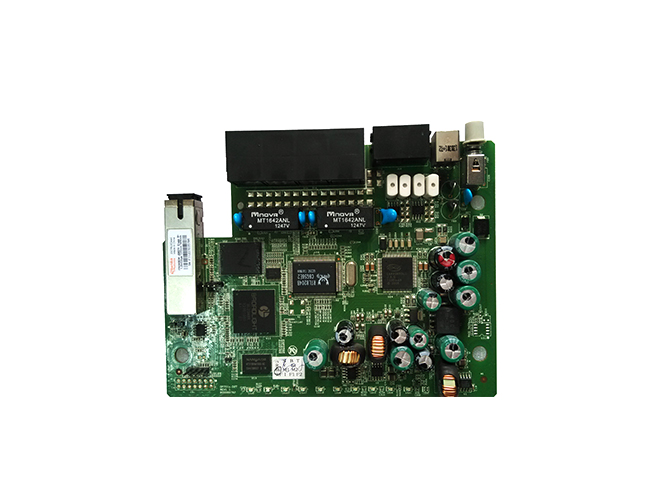
The connection process between flexible circuit parts and rigid functional modules of rigid-flex printed circuit boards is a core manufacturing technology that determines product stability, structural durability and electrical transmission performance in high-density electronic assembly. This integrated connection process mainly covers pre-treatment positioning, precision lamination alignment, conductive interconnection welding, edge reinforcement shaping and post-process reliability aging treatment, which is widely applied in wearable devices, aerospace control circuits, medical precision instruments and foldable intelligent terminal core circuits.
Before formal connection, surface cleaning and micro-etching treatment must be carried out on both flexible circuit segments and rigid PCB modules to completely remove surface oxidation layers, residual solder paste dust and organic pollutants, ensuring uniform adhesion of subsequent bonding materials and stable contact resistance. High-precision visual alignment equipment is adopted to complete accurate positioning within micron-level tolerance, effectively avoiding offset deviation during lamination that leads to circuit open circuit or short circuit failure. In the intermediate interconnection stage, two mainstream processes are commonly used: hot-press conductive adhesive bonding and laser micro-welding connection. Conductive silver adhesive and copper-based conductive adhesive are selected according to current load demand, which features low-temperature forming, flexible stress relief and strong adaptability to bending deformation, suitable for frequently bent joint positions. Laser spot welding realizes metal circuit layer fusion connection with high bonding strength and excellent high-temperature resistance, ideal for high-current and high-frequency signal transmission connection parts.
After basic electrical connection is completed, targeted structural reinforcement is essential. High-temperature resistant flexible insulating glue is applied to the joint gap to fill gaps, isolate external moisture and dust, and buffer mechanical vibration and bending shear force. For products requiring long-term cyclic bending tests, reinforcing steel sheets and high-elasticity buffer gaskets are added at the transition junction to disperse concentrated stress and prevent flexible circuit copper foil from breaking and peeling off due to repeated folding. Finally, strict multi-dimensional reliability tests including high and low temperature cycle test, damp heat aging test, bending fatigue test and impedance continuity detection are conducted to verify connection stability. This integrated connecting process effectively balances the flexible bending performance of flexible circuits and the structural support performance of rigid modules, realizes seamless transition of mechanical structure and consistent transmission of electrical signals, greatly improves the overall service life and environmental adaptability of rigid-flex circuit boards, and meets the high-standard assembly demands of sophisticated electronic equipment in complex working environments.




 Home >


