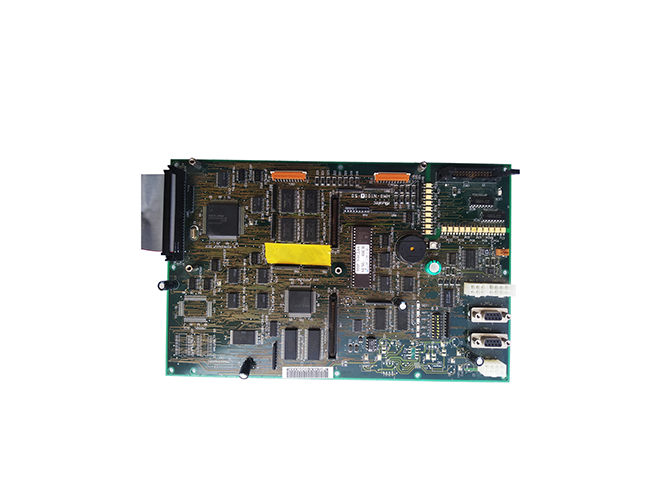
Controlling the uniformity of hole wall copper thickness is a core technical challenge in the manufacturing of thick copper PCBs, as uneven copper thickness can lead to poor conductivity, insufficient current-carrying capacity, and even premature failure of the board. Thick copper PCBs, defined by a copper thickness of 70μm or more, have higher requirements for hole wall copper uniformity due to their application in high-power and high-current scenarios such as industrial control and automotive electronics. According to IPC-6012 standards, the copper thickness tolerance for Class 3 thick copper PCBs should be within ±10%, and the minimum hole wall copper thickness shall not be less than 18μm, which puts strict demands on the entire manufacturing process.
The key to controlling uniformity lies in solving the problem of uneven current distribution during electroplating, which is the main cause of uneven copper thickness. The "edge effect" in traditional DC electroplating causes current to concentrate on the board edges and surface, resulting in thicker copper on the board surface than on the hole wall. To address this, pulse electroplating technology is widely adopted. By using periodic current on-off cycles, pulse electroplating allows copper ions in the plating solution to redistribute during the "off" phase, avoiding the depletion of copper ions inside the holes and promoting uniform deposition of copper on the hole wall and board surface. Additionally, installing a cathode movement device in the electroplating tank enables the PCB to move reciprocally, breaking the diffusion layer near the hole mouth and facilitating the smooth entry of copper ions into the holes.
Optimizing the plating solution system and process parameters is another crucial measure. High-dispersibility acid copper plating solutions are selected, and the concentrations of copper ions, sulfuric acid, and chloride ions are strictly controlled—chloride ions, for example, are maintained between 50-80ppm to inhibit excessive copper deposition on the edges. Auxiliary anodes and shielding plates are also used: auxiliary anodes supplement the current density inside the holes, while shielding plates reduce the current density at the board edges, achieving balanced current distribution. Preprocessing cleanliness is equally important; backlight testing is performed before electroplating to ensure no drill residue or resin remains on the hole wall, which would otherwise affect copper layer adhesion and uniformity. Finally, online X-ray thickness gauges are used for real-time detection, and unqualified products are reworked to ensure all positions meet the standard.




 Home >


