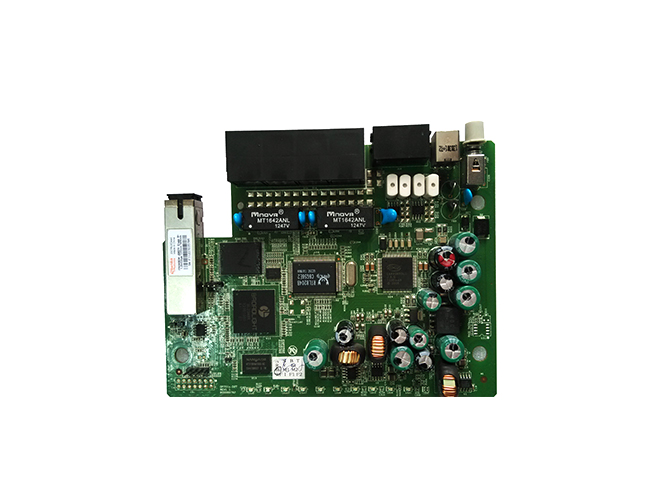
Robot motor drive systems require PCB boards with excellent power carrying capacity, anti-interference performance and structural integration, making multi-layer high-density interconnection the core design requirement. Modern industrial robots and mobile service robots are equipped with multiple joint motors and driving actuators, which lead to a large number of power lines, signal lines and control lines that need to be arranged in a limited PCB space. The multi-layer PCB structure, usually adopting 6-layer to 12-layer stacking design, effectively separates power layers, ground layers and signal layers, realizing physical isolation between high-power drive circuits and weak-current control circuits. This layered layout fundamentally reduces electromagnetic interference caused by high-frequency switching of motor drive chips and ensures the stable output of drive signals during high-speed operation of robot motors.
High-density interconnection technology relies on fine-pitch wiring, micro-vias and buried blind via processes to improve PCB space utilization. Different from traditional single-layer and double-layer PCBs, the multi-layer high-density design can arrange dense power traces and precision signal traces in a stacked manner, meeting the miniaturization and lightweight development needs of robot motor drive modules. In the wiring process, high-current power layers adopt wide copper foil wiring and thickened copper plating technology to reduce line impedance and heat generation, while signal layers adopt impedance matching wiring to avoid signal attenuation and distortion. Meanwhile, uniform ground laying and multi-point grounding design are adopted to form a complete low-impedance grounding system, which significantly enhances the anti-electromagnetic interference ability of the drive board in complex industrial environments.
In practical application, the multi-layer high-density interconnection design of motor drive PCB also needs to take thermal design and structural reliability into account. Robot motor drive will produce continuous high heat during long-term operation, so the multi-layer board is equipped with thermal vias and copper foil pouring areas in the heat concentration area to realize rapid heat conduction and dissipation. In addition, the high-density interconnection structure optimizes the component layout, avoids excessive wiring crossing and overlapping, improves the structural stability of the PCB, and effectively resists vibration and impact during robot movement and joint rotation. This design greatly improves the service life and operation stability of the robot motor drive system, and is widely used in articulated robots, AGV handling robots and automated production equipment.




 Home >


