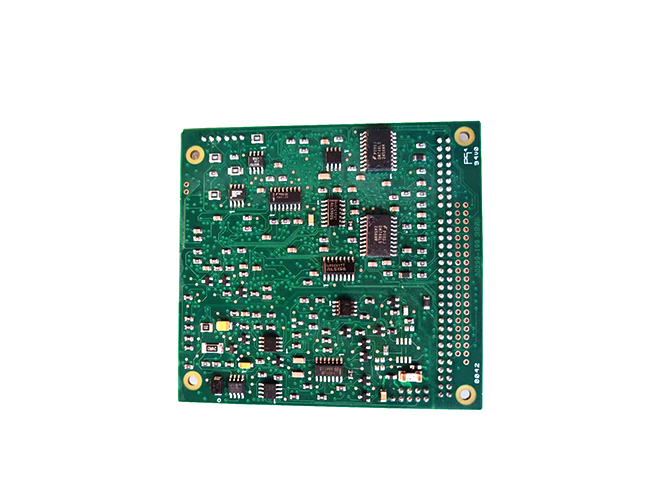
The rapid iteration of autonomous driving technology has driven the comprehensive upgrade of vehicle millimeter-wave radar from traditional 2D detection to high-precision 4D imaging perception, putting forward unprecedented technical requirements for supporting PCB design, materials and manufacturing. Different from conventional 2D radar that only detects distance and speed, 4D imaging millimeter-wave radar operates in 77GHz and 79GHz high-frequency bands, realizing four-dimensional perception of distance, speed, horizontal angle and vertical angle, and supports ultra-high angular resolution and multi-target tracking. This high-frequency and high-precision working mode makes PCB performance the core factor restricting radar imaging accuracy, signal stability and environmental adaptability. Traditional low-frequency radar PCBs with ordinary FR4 substrates can no longer meet the demands, as they suffer from severe dielectric loss, unstable dielectric constant and large signal delay deviation in millimeter-wave frequency bands, leading to blurred imaging and reduced detection accuracy.
The core of PCB upgrade for 4D imaging radar lies in high-frequency material optimization and high-precision structural design. In terms of substrate materials, high-performance low-loss materials such as Rogers and Taconic replace ordinary FR4, featuring stable dielectric constant (Dk) and ultra-low loss tangent (Df) to minimize signal attenuation and phase distortion during high-frequency transmission. Meanwhile, the PCB layer stack structure is upgraded to multi-layer buried stripline layout, concentrating RF signal routing on buried layers and reserving the top layer for antenna arrays, which effectively avoids component interference and optimizes antenna radiation efficiency. Precision impedance control within ±5% tolerance is adopted for high-speed signal traces, combined with back-drilling technology to eliminate via stubs and reduce high-frequency signal reflection loss.
In addition to electrical performance upgrades, the upgraded PCB also strengthens thermal management and automotive-grade reliability. 4D imaging radar integrates massive MIMO antenna channels and high-power MMIC chips, generating concentrated heat during operation. The upgraded PCB adopts thickened copper layers and dense thermal vias to build an efficient heat dissipation channel, preventing performance degradation caused by high-temperature heat accumulation. Moreover, it meets AEC-Q100 Grade 2 automotive specifications, adapting to extreme temperature cycles of -40°C to +150°C and severe vibration environments in vehicle wheel hubs and engine compartments. The optimized PCB structure significantly improves the anti-interference ability of radar signals, realizes high-precision 4D imaging of complex road conditions, and provides reliable hardware support for L2+ to L4 autonomous driving perception systems.




 Home >


