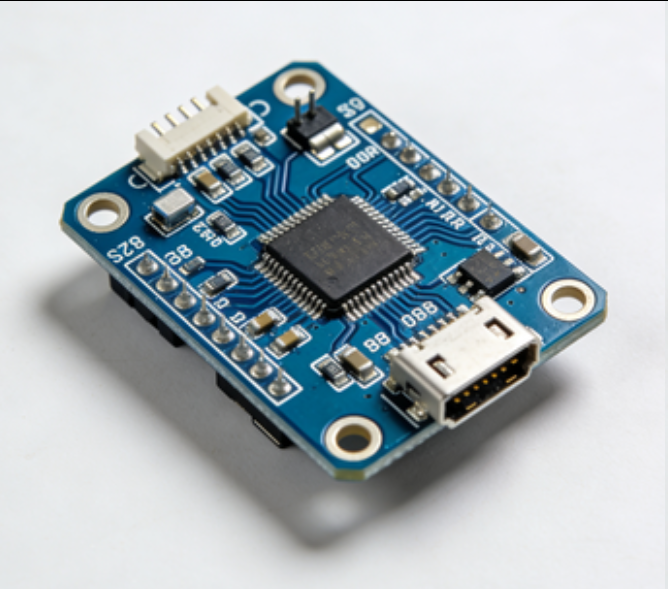
PCB boards for smart switches are specialized circuit boards that power and
control intelligent light switches—devices that enable remote control (via
smartphone apps, voice assistants like Alexa/Google Home) and automated
operation (scheduling, motion sensing) of lighting systems. Unlike traditional
switch PCBs (which only handle basic on/off functionality), smart switch PCBs
integrate wireless communication modules, microcontrollers, and power management
circuits to support smart features. They must meet safety standards for
electrical switching (e.g., IEC 61058-1 for switches) and ensure compatibility
with home electrical systems (110V/220V AC), while being compact enough to fit
into standard wall switch boxes (often 86mm×86mm or 120mm×74mm).
Key design features of smart switch PCBs include:
Dual Power Supply Design: Smart switches require both high-voltage AC power
(to control the light load) and low-voltage DC power (to power the
microcontroller and wireless module). PCBs integrate a step-down power
supply—typically a flyback converter or linear regulator with a rectifier—to
convert 110V/220V AC to 5V/3.3V DC. For “zero-fire wire” smart switches (used in
homes without a neutral wire), PCBs include a leakage current collection circuit
that draws minimal power from the light bulb (even when off) to power the smart
components—ensuring compatibility with LED, incandescent, and CFL bulbs (minimum
load 1W for stable operation).
Wireless Communication Modules: To enable remote control, PCBs integrate
wireless chipsets like Wi-Fi (802.11b/g/n, e.g., ESP8266/ESP32), Zigbee (e.g.,
TI CC2530), or Bluetooth (BLE 5.0, e.g., nRF52832). Wi-Fi modules are popular
for direct smartphone connectivity, while Zigbee is used for multi-device smart
home networks (reducing power consumption and interference). PCBs include
antenna designs—either onboard PCB antennas (for compactness) or external chip
antennas (for better signal range, up to 50 meters in open spaces)—to ensure
reliable communication.
Load Control and Protection Circuits: To switch the light load safely, PCBs
use solid-state relays (SSRs) or triacs (for AC loads) instead of mechanical
relays—SSRs offer silent operation and longer lifespan (100,000+ cycles)
compared to mechanical alternatives. Protection circuits include over-current
fuses (to prevent damage from short circuits), over-voltage protection (OVP)
diodes (to handle voltage spikes), and surge protection (e.g., MOVs—metal oxide
varistors—to absorb transient voltage surges from the power grid). For dimmable
smart switches, PCBs add PWM (pulse-width modulation) or TRIAC dimming circuits
to adjust light brightness, with compatibility for different bulb types (e.g.,
0-10V dimming for LEDs).
Microcontroller and Sensor Integration: A low-power microcontroller (e.g.,
STM32L0 series, ATmega328P) acts as the “brain” of the smart switch, processing
commands from the app/voice assistant and controlling the load. PCBs often
integrate sensors for automation: motion sensors (PIR, passive infrared) to turn
lights on when movement is detected, light sensors (LDRs or photodiodes) to
adjust brightness based on ambient light, and temperature sensors (e.g.,
DS18B20) to monitor overheating. For scheduling, the microcontroller includes a
real-time clock (RTC) module to track time without relying on wireless
connectivity.
Compliance and safety are critical: smart switch PCBs must pass IEC 61058-1
(electrical safety for switches), EN 62368-1 (audio/visual and IT equipment
safety), and EMC tests (e.g., CISPR 22) to avoid interference with other home
devices. They also support encryption (e.g., WPA2 for Wi-Fi, AES-128 for Zigbee)
to protect wireless commands from hacking. By combining smart functionality,
safety, and compatibility, smart switch PCBs enable convenient, energy-efficient
lighting control in modern homes.




 Home >


