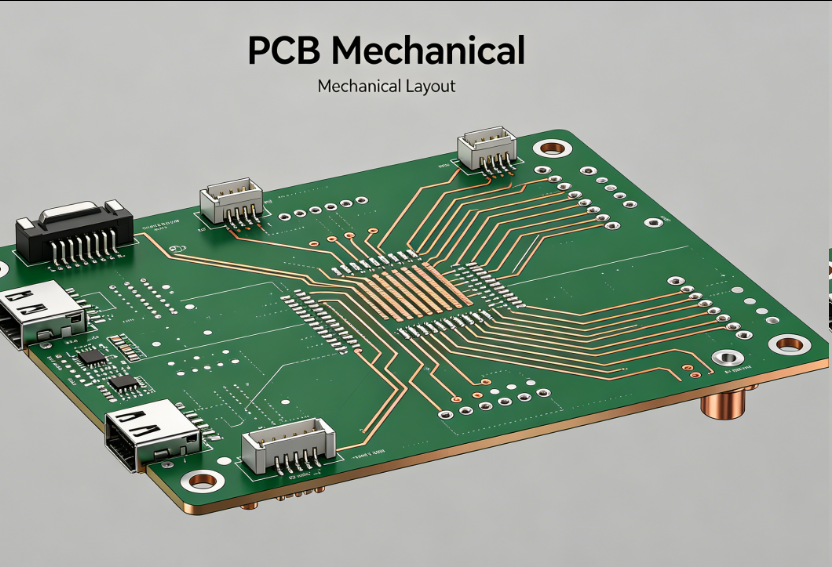
PCB mechanical performance testing is a critical process to evaluate the structural integrity and durability of printed circuit boards under various mechanical stresses they may encounter during manufacturing, assembly, transportation, and actual operation. These tests are designed to simulate real-world conditions and identify potential defects such as cracks, delamination, component detachment, or structural deformation that could lead to premature failure of electronic devices. The selection of specific mechanical tests depends on the application scenario of the PCB, such as consumer electronics, automotive, aerospace, or industrial control, as different fields impose distinct mechanical requirements on PCBs.
Key mechanical performance tests include bending test, tensile test, peel test, impact test, and vibration test. Bending test is commonly used to assess the flexibility and fracture resistance of PCBs; it involves fixing the two ends of the PCB and applying a controlled pressure at the center to measure the bending strength and deflection. According to industry standards such as IPC-TM-650 2.4.19, for a PCB with a thickness of 1.6mm, the bending radius should be no less than 10mm, and no circuit breakage or solder joint detachment should occur after 10 cycles of bending at ±90° with a 1kg load. Tensile test focuses on the tensile strength of PCB materials, especially the copper foil and substrate interface, to ensure that the copper foil does not peel off under tensile forces. Peel test specifically measures the adhesion between the copper foil and the substrate, requiring a minimum peel strength of 1.1N/mm for rigid PCBs as specified in relevant standards.
Impact test simulates sudden collisions or drops that PCBs may experience during transportation or use, applying an impact acceleration of 50m/s² for 11ms in both positive and negative directions three times each, with no structural deformation or circuit breakage allowed. Vibration test is particularly important for PCBs used in automotive and aerospace applications, where the PCB is fixed on a vibration platform and tested at a frequency range of 10-2000Hz with an acceleration of 5m/s² for 1 hour in each of the X, Y, and Z axes, ensuring no solder joint loosening or component displacement. Additionally, tests such as CTE (Coefficient of Thermal Expansion) test and hardness test are also included to evaluate the thermal-mechanical stability and surface hardness of the PCB, providing comprehensive data to ensure that the PCB can withstand the mechanical challenges throughout its service life.




 Home >


