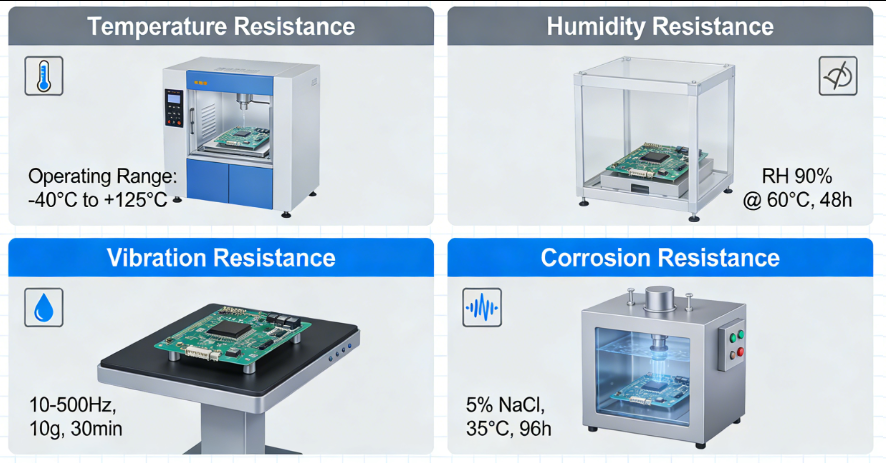
PCBA (Printed Circuit Board Assembly) environmental resistance performance refers to the ability of the assembled circuit board to maintain its structural integrity, electrical functionality, and performance stability when exposed to various harsh environmental conditions during its service life. This performance is crucial for ensuring the reliability and durability of electronic products, especially those used in extreme environments such as industrial control, automotive, aerospace, and outdoor equipment. The environmental factors that PCBA needs to resist are diverse, and each factor imposes different challenges on the materials, components, and assembly processes of PCBA.
One key aspect of PCBA environmental resistance is temperature resistance, which includes both high-temperature and low-temperature resistance. High temperatures can cause the melting of solder joints, degradation of insulation materials, and thermal aging of components, leading to increased resistance, short circuits, or component failure. For example, in automotive engine compartments, PCBA may be exposed to temperatures above 125°C for long periods, requiring the use of high-temperature-resistant solder, heat-resistant substrates, and components with wide operating temperature ranges. Low temperatures, on the other hand, can make plastic materials brittle, reduce the flexibility of solder joints, and cause condensation, which may lead to insulation breakdown or poor contact. PCBA used in cold regions or aerospace applications must withstand temperatures as low as -40°C or even lower without losing functionality.
Another important aspect is humidity and moisture resistance. High humidity environments can cause moisture absorption in the PCB substrate and components, leading to electrolytic corrosion of metal pads and solder joints, delamination of the substrate, and leakage current. In severe cases, moisture can cause short circuits and permanent damage to the PCBA. To enhance moisture resistance, PCBA is often treated with conformal coating, which forms a protective layer on the surface to prevent moisture penetration. Additionally, the selection of moisture-proof components and proper storage and handling during the assembly process are also critical to improving humidity resistance. Other environmental resistance aspects include corrosion resistance (against chemicals, salt spray, and pollutants), vibration and shock resistance, and dust resistance, all of which are essential for ensuring the long-term stable operation of PCBA in different application scenarios.




 Home >


