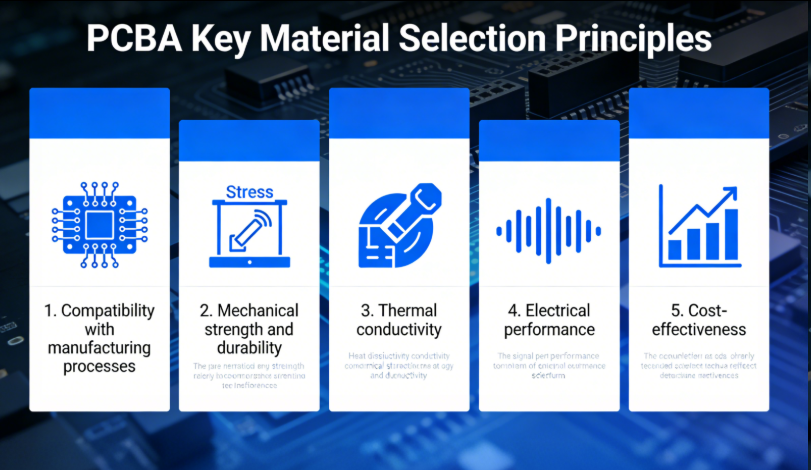
The selection of key PCBA materials is a critical decision that directly
impacts the performance, reliability, cost, and manufacturability of the final
product. Key materials include integrated circuits (ICs), printed circuit boards
(PCBs), solder, capacitors, resistors, and connectors, which play a vital role
in the functionality and stability of the PCBA. To ensure optimal material
selection, several core principles must be followed, starting with technical
compatibility. The selected materials must be compatible with the PCBA’s design
specifications, including electrical parameters (voltage, current, resistance,
capacitance), physical dimensions (package size, form factor), and thermal
performance (heat dissipation, operating temperature range). For example, ICs
must have the correct pin configuration and electrical characteristics to
integrate with other components, while PCBs must be designed to support the
required component density and signal integrity.
Another important principle is quality and reliability. Key PCBA materials
must meet strict quality standards to ensure long-term performance and minimize
the risk of component failure. This involves selecting materials from reputable
suppliers with a proven track record of producing high-quality products, as well
as verifying material compliance with industry standards (such as IPC, ISO, and
RoHS). Reliability testing, such as temperature cycling, humidity testing, and
vibration testing, should be conducted to ensure that materials can withstand
the operating conditions of the end product. Cost-effectiveness is also a key
principle; while quality and performance are paramount, materials should be
selected to balance cost with functionality. This involves evaluating the total
cost of ownership (TCO) of materials, including procurement costs, storage
costs, and potential costs associated with material failure or replacement.
Manufacturability is another critical principle in key material selection.
The selected materials must be compatible with the production processes used to
assemble the PCBA, such as SMT, through-hole technology (THT), and reflow
soldering. For example, solder must have the correct melting point and
solderability to ensure strong and reliable joints, while components must have
appropriate packaging to facilitate automated placement. Environmental
compliance is also a necessary principle, as materials must meet global
environmental regulations (such as RoHS and REACH) to ensure market access and
sustainability. Finally, supply chain stability should be considered; key
materials should be sourced from suppliers with stable production capacity,
short lead times, and a robust supply chain to avoid shortages and production
delays. By following these principles, manufacturers can select key PCBA
materials that optimize product performance, reduce costs, and ensure production
continuity.




 Home >


