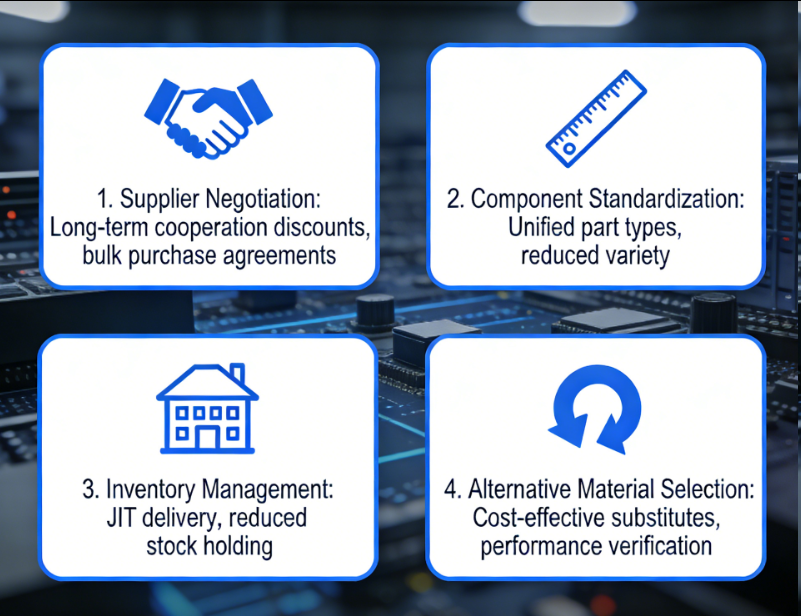
PCBA material cost accounts for a significant proportion of the total production cost (usually 60%-80%), making material cost control a key focus for PCBA manufacturing enterprises to improve profitability and competitiveness. Effective material cost control requires a comprehensive approach that covers the entire material lifecycle, from supplier selection and procurement to material usage and waste reduction. The core goal is to minimize material costs while ensuring the quality and availability of materials needed for production. By implementing scientific cost control methods, enterprises can reduce unnecessary expenses, optimize resource allocation, and enhance their market competitiveness.
Supplier management and procurement optimization are the foundation of PCBA material cost control. Selecting the right suppliers is crucial; enterprises should conduct a comprehensive evaluation of suppliers based on factors such as product quality, price, delivery time, and after-sales service, rather than simply choosing the lowest-priced supplier. Establishing long-term cooperative relationships with reliable suppliers can help enterprises negotiate better pricing terms, such as volume discounts, long-term contracts, and preferential payment conditions. Additionally, implementing centralized procurement for commonly used materials can increase purchasing volume, enabling enterprises to obtain lower unit prices. It is also important to conduct regular supplier audits and performance evaluations to ensure that suppliers continue to meet quality and cost requirements, and to identify potential alternatives if a supplier’s performance declines.
Optimizing material usage and reducing waste is another key method for controlling PCBA material costs. In PCBA production, material waste can occur due to over-ordering, incorrect material selection, component damage during handling, or rework due to quality issues. To reduce waste, enterprises should implement accurate material demand forecasting based on production orders and historical data, avoiding over-ordering and excess inventory. Additionally, selecting the right materials for each product, considering factors such as performance requirements, cost, and availability, can help reduce unnecessary expenses. For example, using alternative components that meet the product’s technical specifications but have a lower cost can significantly reduce material costs without compromising quality. Proper material handling and storage are also important; implementing strict inventory management practices to prevent material damage, expiration, or loss, and training employees to handle materials carefully to avoid waste.
Process optimization and technological improvement can also contribute to PCBA material cost control. For example, optimizing the solder paste printing process to reduce solder paste waste, using automated component placement machines to improve placement accuracy and reduce component damage, and implementing in-process inspection to detect defects early and avoid rework that wastes materials. Additionally, adopting lean production principles to eliminate waste in the production process, such as over-processing and excess inventory, can further reduce material costs. Regularly analyzing material cost data, such as the cost of each component, material usage rates, and waste rates, can help enterprises identify cost-saving opportunities and adjust their cost control strategies accordingly. By integrating these methods, enterprises can effectively control PCBA material costs, improve profitability, and maintain a competitive edge in the market.




 Home >


