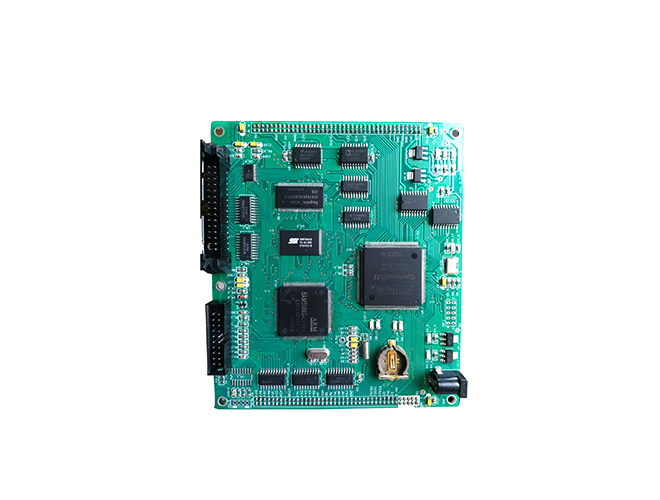
The rapid expansion of the new energy industry, including solar energy, wind energy, energy storage systems, and electric vehicles, has put forward increasingly stringent supporting requirements for PCBA (Printed Circuit Board Assembly), which has become the core hardware foundation for the stable and efficient operation of new energy equipment. Unlike traditional consumer electronics PCBA, new energy-related PCBA must withstand harsh working environments, high-power loads, and long-term stable operation demands, making its supporting requirements cover material selection, structural design, performance indicators, and reliability testing in an all-round way. With the global installed renewable energy capacity expected to continue growing, the demand for high-performance PCBA in new energy systems is showing an explosive growth trend, driving the continuous upgrading of PCBA supporting technologies to adapt to the diversified needs of different new energy scenarios.
In terms of material supporting, new energy PCBA has strict requirements for substrate materials and electronic components to cope with extreme working conditions. For example, solar inverters and wind power converters often operate in outdoor environments with large temperature fluctuations, high humidity, and strong corrosion, requiring PCBA substrates to use high-Tg (≥170℃) halogen-free materials with excellent thermal stability and moisture resistance, such as Isola 370 HR, which has a water absorption rate of less than 0.1% to prevent delamination in humid and hot environments. At the same time, thick-copper substrates (≥2oz) are widely used to improve current-carrying capacity and heat dissipation performance, especially in photovoltaic inverters where the current often exceeds 100A, and 3oz or thicker copper foil can effectively reduce temperature rise caused by high current. Electronic components must meet high-temperature and anti-aging standards, such as high-temperature lead-free solder with a melting point of ≥230℃ to adapt to the heating of high-power devices, ensuring long-term reliability in harsh environments.
Structural design and performance supporting are also key aspects of new energy PCBA requirements. High-voltage resistance and insulation performance are core indicators for new energy PCBA, especially in 1500V photovoltaic systems, where the creepage distance of PCBA must be ≥8mm, and slot isolation or window opening technology is required to prevent short circuits caused by high-voltage breakdown. Heat dissipation optimization is another critical requirement; aluminum substrates with thermal conductivity >2.0 W/m•K or copper coins are often used to reduce the junction temperature of IGBT and MOSFET, and multi-layer boards integrate heat dissipation through-hole arrays to achieve rapid heat conduction. In addition, new energy PCBA must have strong anti-vibration and anti-interference capabilities: key components such as electrolytic capacitors are fixed with silicone or filled with underfill to resist mechanical stress from wind turbine vibration or vehicle movement, while shielded differential pairs and ground isolation designs are adopted to reduce electromagnetic interference and ensure stable signal transmission.
Reliability testing and compliance supporting are indispensable links to ensure the quality of new energy PCBA. All PCBA products must go through strict environmental testing, including temperature cycle testing (-40℃~+85℃), salt spray corrosion testing (in accordance with IEC 60068-2-52 standard), and random vibration testing (20-2000Hz), to verify their adaptability to harsh outdoor environments. At the same time, they must comply with global environmental regulations such as RoHS and REACH, using halogen-free, lead-free materials to achieve green manufacturing. For energy storage systems, PCBA also needs to support redundant design and real-time monitoring functions, enabling rapid fault diagnosis and alarm to ensure the safe and efficient operation of energy storage equipment throughout its 25-year lifecycle. These supporting requirements collectively promote the transformation of PCBA from traditional manufacturing to high-precision, high-reliability, and green development, providing strong technical support for the renewable energy revolution.




 Home >


