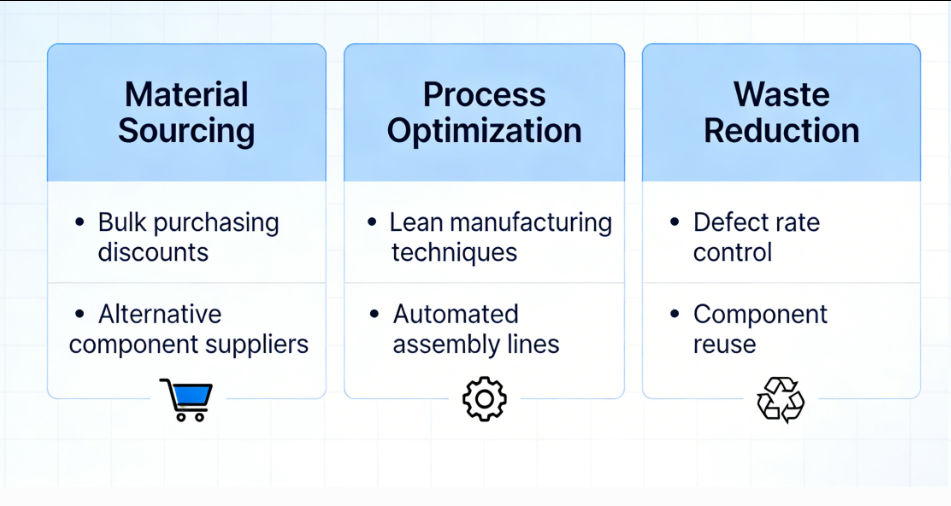
Reducing PCBA production costs is a critical goal for manufacturers, as it directly impacts profitability and competitiveness. However, cost reduction must be balanced with maintaining product quality and reliability, as cutting costs at the expense of quality can lead to increased rework, returns, and long-term losses. There are several effective strategies to reduce PCBA production costs, focusing on design optimization, component sourcing, process efficiency, and waste reduction.
Design optimization is one of the most effective ways to reduce PCBA production costs, as design decisions have a significant impact on material, labor, and manufacturing costs. Implementing design for manufacturability (DFM) principles early in the design process helps minimize complexity, reduce material usage, and simplify manufacturing. For example, using standard board sizes, minimizing the number of layers and vias, and grouping components to reduce solder paste usage can lower material costs. Additionally, designing PCBs with single-sided SMT components (instead of double-sided) reduces assembly time and costs, as it eliminates the need for flipping the board during soldering. Incorporating design for testability (DFT) principles also reduces testing costs by making it easier to detect defects during production, minimizing rework.
Component sourcing strategies are another key factor in cost reduction. Components typically account for 30-50% of total PCBA production costs, so optimizing component sourcing can yield significant savings. Strategic sourcing includes bulk purchasing to leverage volume discounts, working with authorized distributors to ensure competitive pricing and component quality, and identifying alternative components that are more cost-effective but meet the same performance requirements. Avoiding custom components (which are more expensive and have longer lead times) and using standard, widely available components can also reduce costs. Additionally, monitoring component life cycles and avoiding obsolete components helps prevent costly redesigns and delays.
Process efficiency and waste reduction are also critical for cost reduction. Improving production efficiency (as discussed in the previous section) reduces labor costs, machine downtime, and material waste. Implementing lean manufacturing principles to eliminate waste (such as overproduction, excess inventory, and rework) further reduces costs. For example, reducing rework rates by implementing rigorous quality control systems (AOI, X-ray) and optimizing soldering processes can save labor and material costs. Additionally, panelizing multiple PCBs into a single fabrication run improves production throughput, reduces handling costs, and minimizes material waste. Finally, investing in employee training to improve skills and reduce errors can lower rework costs and improve overall process efficiency. By combining design optimization, strategic component sourcing, and process efficiency improvements, manufacturers can reduce PCBA production costs without sacrificing quality or reliability.




 Home >


