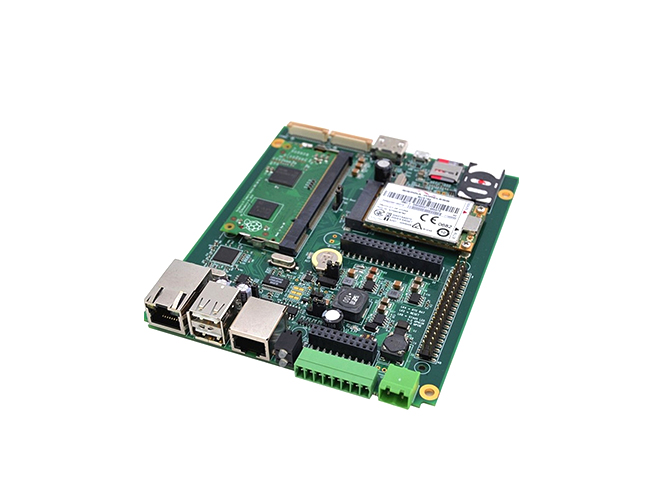
Virtual Reality (VR) technology has emerged as a transformative force in the PCBA (Printed Circuit Board Assembly) industry, redefining traditional workflows from design and prototyping to testing and maintenance. Unlike conventional 2D design tools that often limit engineers’ ability to visualize complex circuit layouts, VR creates immersive 3D environments where designers can interact with virtual PCBA models in real time. This immersive experience addresses a key pain point in PCBA design: the difficulty of identifying spatial conflicts, signal interference, or component placement errors in flat, two-dimensional representations. By donning VR headsets, engineers can “walk through” the virtual circuit board, inspecting every layer, trace, and component from multiple angles, which significantly reduces the risk of design flaws that would otherwise only be detected during physical prototyping.
In the prototyping and testing phase, VR technology further optimizes efficiency and cost-effectiveness. Traditional PCBA prototyping involves time-consuming and expensive processes of fabricating physical boards, which can take days or even weeks to produce—especially for complex designs used in automotive, aerospace, or medical devices. With VR, engineers can simulate the performance of the PCBA in a virtual environment, testing how components interact under different conditions (such as temperature variations or voltage fluctuations) without manufacturing a single physical prototype. This not only shortens the prototyping cycle by 30% to 50% but also cuts down material waste and development costs, making it easier for companies to iterate on designs and bring products to market faster. Additionally, VR-enabled testing can simulate rare or extreme scenarios that are difficult to replicate in physical labs, ensuring the PCBA’s reliability in real-world applications.
Beyond design and testing, VR is also revolutionizing PCBA maintenance and training. For complex electronic devices—such as industrial control systems or medical equipment—maintaining and repairing PCBA components can be challenging, especially for technicians who lack hands-on experience with specific board layouts. VR training programs allow technicians to practice disassembling, troubleshooting, and repairing virtual PCBA models in a risk-free environment, helping them master complex procedures without damaging physical equipment. Moreover, remote maintenance is enhanced through VR: experts can guide on-site technicians in real time by overlaying virtual instructions onto the physical PCBA, reducing downtime and improving repair accuracy. As VR technology becomes more accessible and affordable, its integration into PCBA workflows is becoming a competitive advantage, enabling companies to enhance quality, reduce costs, and streamline operations across the entire product lifecycle.




 Home >


