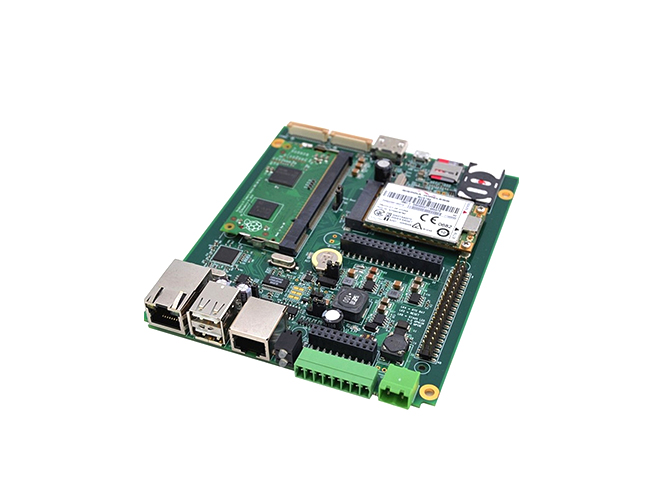
HDI (High Density Interconnect) boards are the core carrier of modern smartphone motherboards, adapting to the trend of thin, light, and high-integration mobile terminals. The biggest technical challenge of HDI board manufacturing lies in micro-hole processing and ultra-fine line production, which are far more stringent than traditional PCB processes. Contemporary 5G and smart phones require stacked HDI structures with multiple layers of blind and buried holes, and the micro-vias diameter is usually reduced to 0.075–0.15mm. Laser drilling becomes the mainstream process, yet it faces difficulties including inconsistent hole wall roughness, residual laser carbonization, and micro-hole position deviation. Poor hole wall treatment will directly cause poor electroplating adhesion, leading to open circuit or resistance drift during long-term device operation.
Another key difficulty is ultra-fine line and spacing fabrication. To arrange more chips, sensors, and radio frequency components in a limited board area, mobile HDI boards require line width and line spacing to reach 25–40μm. Traditional etching processes are prone to line thinning, burrs, and short circuits between lines. In addition, the thin substrate of mobile motherboards brings challenges to lamination alignment. Multi-layer alternating lamination of blind and buried holes requires extremely high overlay accuracy, and tiny alignment errors will cause hole dislocation and interlayer connection failure, reducing the board yield rate significantly.
Material adaptability and reliability testing also pose process hurdles. HDI boards need high thermal resistance and low dielectric loss materials to adapt to high-frequency operation of mobile chips. Meanwhile, the frequent bending and vibration of mobile phones require HDI boards to have excellent mechanical toughness. The process needs to strictly control pressing temperature, pressure and time to avoid substrate delamination, resin overflow and interlayer voids. Reliability verification such as thermal cycling and humidity aging further raises the process threshold, requiring precise control of every production link to ensure long-term stable operation of the mobile motherboard.




 Home >


