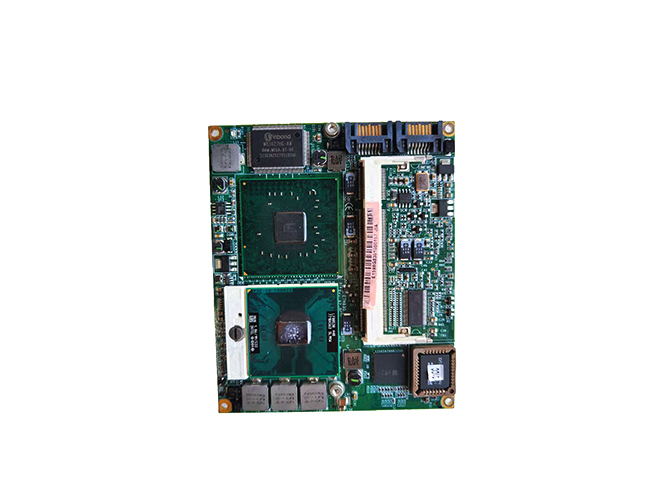
Rigid-flex PCB boards are innovative composite circuit substrates that integrate rigid PCB sections and flexible FPC sections into a single unified structure, solving the structural and connection limitations of traditional single-type circuit boards. This integrated design combines the high rigidity, stability, and load-bearing capacity of rigid PCBs with the excellent bending, twisting, and three-dimensional fitting performance of flexible circuits. Unlike separate rigid and flexible board assembly solutions that require connectors and welding wires, rigid-flex PCBs eliminate intermediate connection accessories, greatly reducing the overall assembly volume, weight, and failure points of electronic products. The seamless integration of internal circuits ensures more stable signal transmission and effectively avoids signal attenuation and interference caused by multi-part docking.
The manufacturing process of rigid-flex PCBs involves sophisticated multi-layer lamination, precision alignment, and selective etching technologies, requiring strict control over material matching and process parameters. Manufacturers typically adopt high-performance dielectric materials with low thermal expansion coefficients to ensure that the board maintains stable electrical performance and structural integrity during repeated bending and long-term operation. The rigid areas provide reliable support for precision components such as chips and connectors, while the flexible areas adapt to complex internal space layouts of equipment, enabling flexible folding and assembly in limited installation environments. This structural advantage makes rigid-flex PCBs irreplaceable in miniaturized and high-reliability electronic devices.
Rigid-flex PCB boards are widely applied in high-end precision electronic fields that require both structural stability and flexible deformation capabilities. Consumer electronics such as foldable smartphones, wearable smart watches, and tablet computers rely on rigid-flex PCBs to achieve ultra-thin body design and folding functions. In industrial and military fields, they are used in aerospace equipment, medical electronic devices, and automotive electronic systems, adapting to harsh working environments such as high vibration, high temperature, and narrow space. With the continuous upgrading of electronic equipment toward miniaturization, high integration, and multi-functionalization, rigid-flex PCB technology is constantly iterating, becoming a core substrate technology supporting the development of next-generation electronic products.




 Home >


