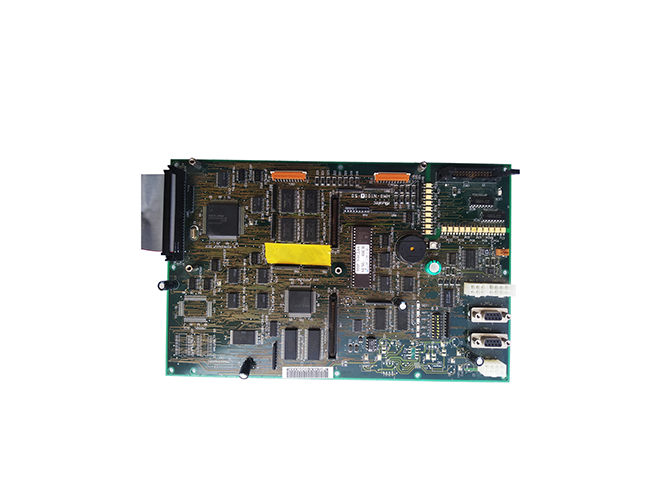
The energy management system (EMS) is the core functional module of robot PCB design, responsible for stable power distribution, dynamic energy regulation, and power consumption optimization of the entire robot system. Unlike traditional consumer electronic PCBs, robot EMS PCB design needs to adapt to complex working conditions such as frequent start-stop, sudden load changes, and long-term continuous operation of mobile and collaborative robots. The core design goal is to balance power supply stability, energy utilization efficiency, and circuit safety, avoiding system downtime or component damage caused by voltage fluctuations, current overload, and energy waste during robot operation.
In hardware circuit design, the EMS PCB adopts a hierarchical power supply architecture to realize graded power management for different functional modules. High-power modules such as drive motors and main controllers are equipped with independent DC-DC step-down and boost circuits to ensure stable voltage output under peak load conditions. Low-power modules including sensors and communication units use low-dropout regulators (LDOs) to reduce power loss. Meanwhile, precision sampling resistors and voltage detection circuits are integrated on the PCB to real-time monitor the working current and voltage of each branch, providing data support for dynamic energy scheduling.
Protection circuit design is an indispensable part of robot EMS PCB development. The PCB is embedded with over-current, over-voltage, under-voltage, and short-circuit protection circuits, which can quickly cut off faulty branches within microseconds to prevent cascading failures of the entire system. In addition, combined with thermal design layout, high-power heating components are arranged with heat dissipation vias and copper pouring areas on the PCB to reduce operating temperature and avoid performance degradation of power devices caused by overheating. This systematic design ensures the robot maintains efficient and safe energy operation in long-term and complex industrial scenarios.




 Home >


