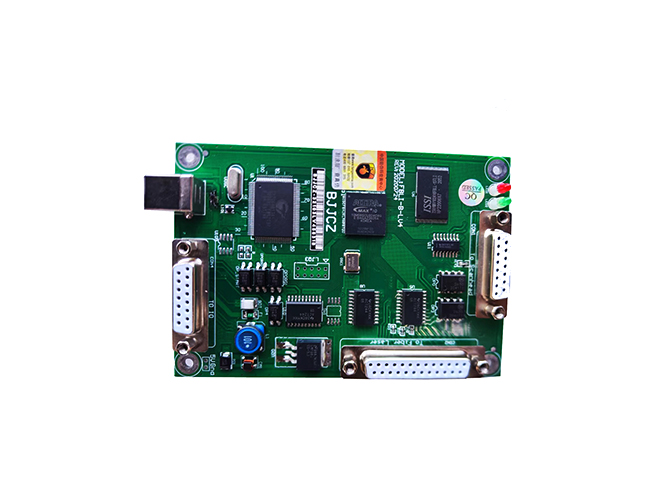
Electromagnetic interference (EMI) is a critical factor affecting the stability of high-speed, high-frequency electronic systems. Electromagnetic shielding PCB relies on systematic structural design to suppress internal electromagnetic radiation and resist external signal interference, achieving electromagnetic compatibility (EMC). Its core design logic is to build a multi-level shielding system combining internal stackup optimization, planar isolation, and external structural shielding, breaking the single shielding mode and realizing full-band and full-angle EMI suppression. Reasonable structural design can reduce electromagnetic coupling noise by more than 80% and effectively improve the anti-interference ability of high-speed circuit systems.
Internal layer stackup optimization is the foundation of electromagnetic shielding PCB design. The core principle is to arrange complete and continuous ground planes adjacent to high-speed signal layers to form a low-impedance shielding loop. For common 4-layer shielding PCBs, the optimal stackup is Signal-GND-Power-Signal, while 6-layer high-performance shielding PCBs adopt Signal-GND-Signal-Power-GND-Signal layout. This structure embeds high-speed signal layers between double ground planes, minimizing signal loop area and greatly reducing electromagnetic radiation intensity. It is necessary to avoid fragmented ground planes and split gaps, as discontinuous ground structures will form EMI leakage channels and destroy the shielding integrity. Meanwhile, pairing power planes with ground planes forms distributed capacitance, which filters high-frequency noise and optimizes power supply stability.
Partition isolation and via fence structure are key mid-layer shielding designs. The PCB board is divided into independent functional areas including high-noise power circuits, high-speed digital circuits, sensitive analog circuits, and RF circuits through physical zoning. Isolation gaps are reserved between different functional areas to prevent crosstalk between high-noise and weak-signal modules. Surrounding sensitive circuits and high-speed signal traces with dense ground stitching vias forms a closed via fence shielding wall, which isolates electromagnetic field propagation in the horizontal direction. The via spacing is strictly controlled within 1/20 of the maximum interference signal wavelength to avoid shielding failure caused by excessive via gaps, ensuring horizontal electromagnetic isolation between different circuit modules.
External physical shielding and aperture optimization further enhance overall shielding performance. For high-shielding-demand scenarios, a metal shielding cover is installed on the PCB surface to form a Faraday cage structure, fully wrapping key components. The shielding cover is tightly connected to the board’s ground ring through conductive solder joints to ensure equipotential grounding and eliminate grounding noise. All ventilation and wiring apertures on the shielding structure must be minimized and centrally arranged, as excessive or scattered apertures will become EMI leakage points. In addition, guard traces grounded at both ends are laid around high-speed differential traces to converge stray electromagnetic fields, suppress common-mode noise, and further improve the PCB’s electromagnetic shielding level and signal stability.




 Home >


