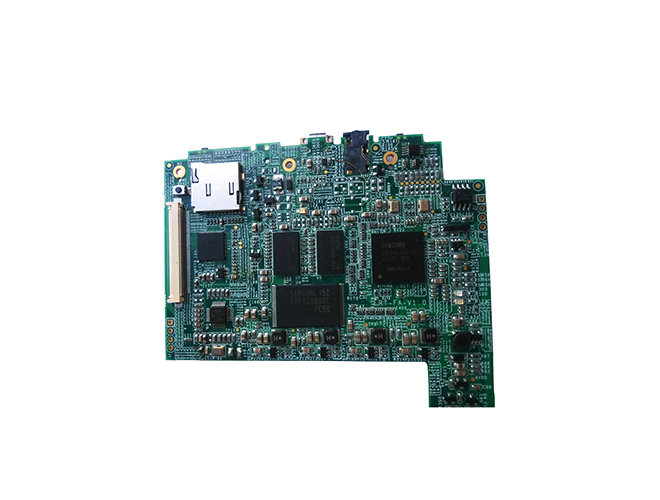
PCB and PCA are two commonly confused terms in the electronics manufacturing industry, but they refer to distinct stages and components of electronic circuits, with clear differences in definition, function, and application. PCB, short for Printed Circuit Board, is a physical substrate that provides mechanical support and electrical connection paths for electronic components. It is made of insulating materials (such as FR-4, a common glass fiber-reinforced epoxy resin) with conductive copper traces etched on its surface, which are designed to connect different components in a predetermined layout. A PCB is essentially a "blank slate"—it has no electronic components attached, only the conductive pathways and pads that allow components to be mounted later. Its core function is to serve as a foundation, ensuring that components are positioned correctly and connected stably, while also isolating different circuits to prevent short circuits.
In contrast, PCA, which stands for Printed Circuit Assembly, refers to the finished or semi-finished product obtained after mounting electronic components (such as resistors, capacitors, integrated circuits, etc.) onto a PCB. In other words, a PCA is a PCB that has undergone the assembly process, where components are soldered to the pads on the PCB to form a functional electronic circuit. The key difference between PCB and PCA lies in whether components are present: a PCB is just the bare substrate, while a PCA is a functional assembly that integrates the PCB and electronic components. For example, a blank circuit board you see in a store is a PCB, while a motherboard taken from a computer—with various chips and components soldered on it—is a PCA.
Another way to understand the difference is from the perspective of manufacturing process and purpose. PCBs are produced through processes such as substrate cutting, copper cladding, photolithography, and etching, focusing on creating accurate conductive paths. PCAs, on the other hand, are manufactured by adding an assembly step to a PCB, transforming a non-functional substrate into a functional electronic module. In practical applications, PCBs are raw materials for electronic manufacturing, while PCAs are the actual functional units used in devices like smartphones, computers, and household appliances. Without a PCB, a PCA cannot exist; without component assembly, a PCB cannot realize any electronic function.




 Home >


