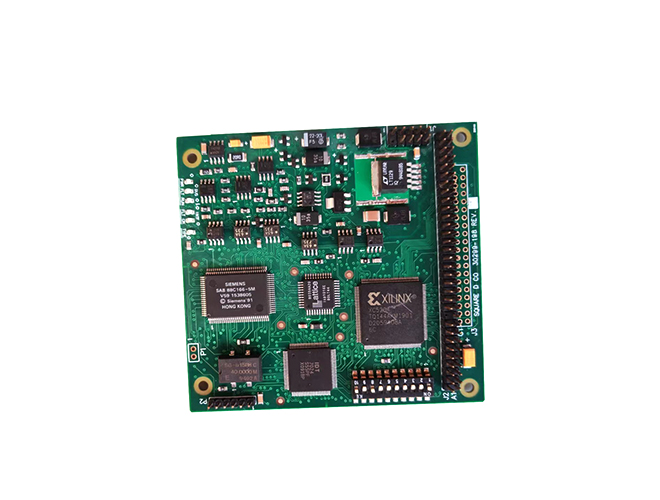
When selecting a surface finish for printed circuit boards (PCBs), Hot Air Solder Leveling (HASL) and Electroless Nickel Immersion Gold (ENIG) are two of the most widely used options, each with distinct advantages, limitations, and ideal application scenarios. The choice between them depends on factors such as PCB design complexity, soldering requirements, environmental conditions, and cost constraints. Understanding the core characteristics of each finish is critical to ensuring the reliability and performance of the final PCBA product.
HASL, a traditional and cost-effective surface finish, involves dipping the PCB into molten solder (typically a tin-lead or lead-free alloy) and then using hot air to blow off excess solder, leaving a uniform solder coating on the copper pads. One of its key advantages is its low cost, making it suitable for high-volume, cost-sensitive applications such as consumer electronics, automotive infotainment systems, and industrial control boards. HASL also provides excellent solderability, as the solder coating directly facilitates the formation of strong solder joints during reflow or wave soldering. However, HASL has notable drawbacks: the hot air leveling process can result in an uneven surface with slight solder bumps, which may cause issues for fine-pitch components (such as BGA, QFP) where precise pad coplanarity is required. Additionally, lead-free HASL may have higher oxidation rates compared to ENIG, reducing the shelf life of the PCB if not properly stored.
ENIG, on the other hand, is a more advanced surface finish that consists of a thin layer of electroless nickel (typically 2-5 μm) followed by a thin immersion gold layer (0.05-0.1 μm). The nickel layer acts as a barrier between the copper and gold, preventing copper diffusion and ensuring long-term solderability, while the gold layer provides excellent corrosion resistance and electrical conductivity. ENIG offers a flat, uniform surface with high coplanarity, making it ideal for fine-pitch and high-density components, such as BGAs, microcontrollers, and high-frequency devices. It also has a longer shelf life (up to 12 months when properly packaged) and performs well in harsh environmental conditions, such as high humidity or temperature fluctuations. However, ENIG is significantly more expensive than HASL, primarily due to the cost of gold and the complex two-step deposition process. It also has a higher risk of "black pad" defect, a rare but critical issue where the nickel layer oxidizes, leading to poor solder joint strength and potential reliability failures.
In summary, HASL is the preferred choice for cost-sensitive, non-fine-pitch applications where solderability and high volume are priorities. ENIG is better suited for high-end, complex PCBs with fine-pitch components, strict reliability requirements, or exposure to harsh environments. For applications that require a balance between cost and performance, alternatives such as Immersion Silver (ImAg) or Electroless Nickel Electroless Palladium Immersion Gold (ENEPIG) may be considered, but HASL and ENIG remain the most widely used options in the industry.




 Home >


